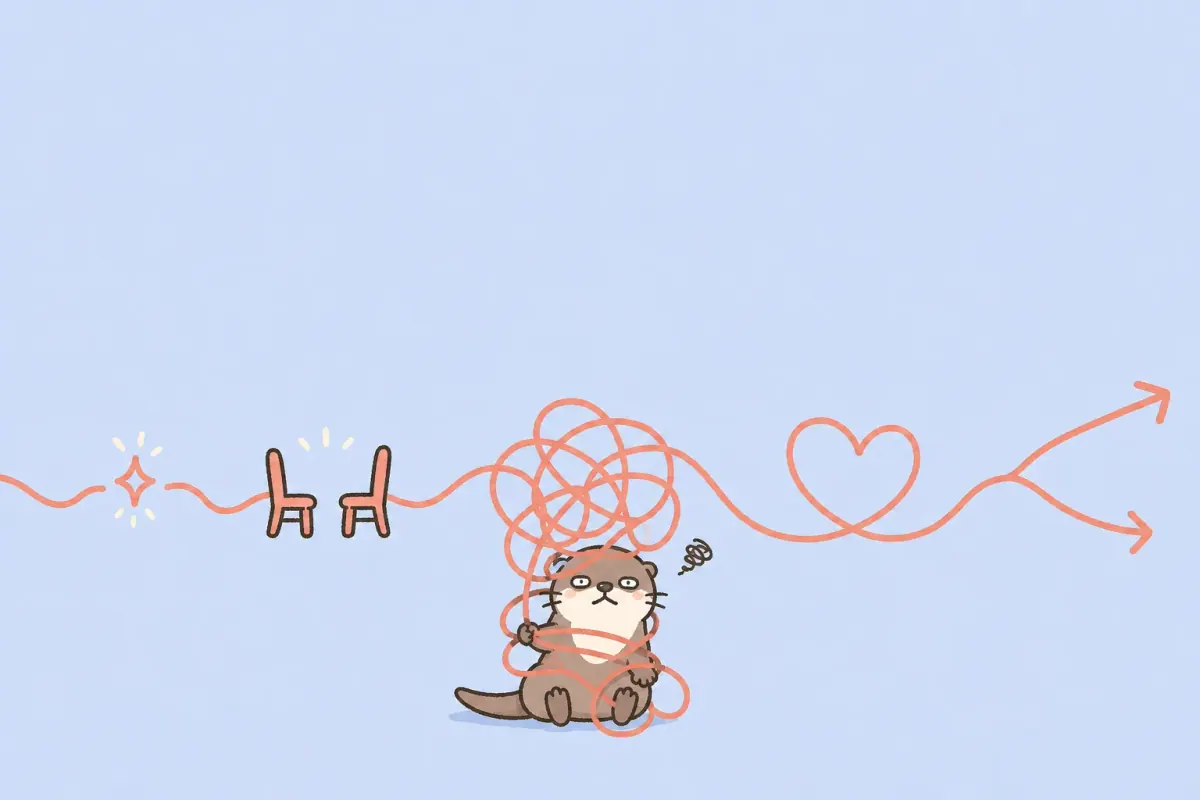
Chinese relationship vocabulary makes more sense as a timeline. Someone is 单身 (dānshēn, single), develops 好感 (hǎogǎn, interest), may enter an 暧昧 (àimèi, ambiguous or flirtatious) stage, then 表白 (biǎobái, confess feelings) and 确定关系 (quèdìng guānxi, define the relationship). Later conversations may involve 异地恋 (yìdìliàn, long-distance dating), 分手 (fēnshǒu, break up), or 复合 (fùhé, get back together).
The useful distinctions are not only translations. 约会 does not guarantee commitment, 对象 can mean a romantic partner or simply an object of attention, and 暧昧 can describe both mutual chemistry and an uncomfortable lack of clarity.
Which words describe being single or interested in someone?
Start before the relationship exists.
| Chinese | Pinyin | Natural meaning |
|---|---|---|
| 单身 | dānshēn | single |
| 单身狗 | dānshēn gǒu | “single dog,” self-mocking internet slang |
| 喜欢 | xǐhuan | like; be romantically interested in |
| 有好感 | yǒu hǎogǎn | have a favorable or interested feeling toward someone |
| 心动 | xīndòng | feel a romantic spark; have your heart stirred |
| 暗恋 | ànliàn | have a secret or unspoken crush |
| 追 | zhuī | pursue or court someone |
我对他有好感 (Wǒ duì tā yǒu hǎogǎn) is softer than 我喜欢他 (Wǒ xǐhuan tā). It says the interest is positive without declaring a full crush. 我好像有点心动了 (Wǒ hǎoxiàng yǒudiǎn xīndòng le) means “I think I’m starting to feel something.”
暗恋 focuses on feelings kept private or unreturned:
我暗恋她很久了。
Wǒ ànliàn tā hěn jiǔ le.
I’ve had a crush on her for a long time.
追 is common but context-sensitive. 他在追我 means “He’s pursuing me,” not literally running behind me. It describes active romantic effort, not ownership and not proof that the interest is welcome.
How do you talk about flirting, dates, and a situationship?
These words occupy the space between interest and an agreed relationship.
约会 and 出去玩
约会 (yuēhuì) means “go on a date” or “a date.” It explicitly frames the meeting as romantic more often than English “hang out” does.
你周末想一起吃个饭吗?
Nǐ zhōumò xiǎng yìqǐ chī ge fàn ma?
Would you like to get something to eat together this weekend?
This invitation leaves the romantic intention less explicit. 要不要跟我约会 (Yào bu yào gēn wǒ yuēhuì?) directly asks for a date. Neither sentence, by itself, means the speakers are already a couple.
撩 and flirtatious attention
撩 (liāo) literally has senses such as lifting or teasing something aside; online and in casual speech it can mean flirting with or charming someone.
- 他是不是在撩你? (Tā shì bu shì zài liāo nǐ?) — Is he flirting with you?
- 别撩了。 (Bié liāo le.) — Stop flirting / stop leading people on.
It is slangy and can sound playful, skeptical, or critical depending on tone. Do not use it as a neutral formal label for every conversation between two people.
暧昧
暧昧 (àimèi) literally describes something unclear or ambiguous. In relationship talk it often means there is noticeable romantic tension or intimacy, but the pair has not clearly defined what they are.
他们关系很暧昧。
Tāmen guānxi hěn àimèi.
Their relationship is ambiguous / there’s clearly something going on between them.
The term is close to “situationship” in many modern contexts, but not identical. It may describe a mutual pre-relationship stage, suspected inappropriate intimacy, or simply unclear behavior. Taiwan’s Ministry of Education dictionary records both the general “unclear” sense and a more negative sense involving concealed behavior (Ministry of Education dictionary). Read the surrounding judgment before choosing an English label.
How do you confess feelings and make the relationship official?
The important sequence is feeling, confession, then agreement. Chinese has clear words for each step.
| Chinese | Pinyin | What happens |
|---|---|---|
| 表白 / 告白 | biǎobái / gàobái | confess romantic feelings |
| 接受 | jiēshòu | accept |
| 拒绝 | jùjué | reject |
| 在一起 | zài yìqǐ | be together; become a couple in context |
| 确定关系 | quèdìng guānxi | define or confirm the relationship |
| 谈恋爱 | tán liàn'ài | date; be in a romantic relationship |
| 交往 | jiāowǎng | associate; in context, date or be in a relationship |
表白 and 告白 overlap. 表白 is common in mainland usage for explicitly revealing your feelings. 告白 is also widely understood and is especially visible in titles, media, and Taiwan-influenced usage.
A confession can be simple:
我喜欢你。你愿意和我在一起吗?
Wǒ xǐhuan nǐ. Nǐ yuànyì hé wǒ zài yìqǐ ma?
I like you. Would you like to be with me?
我们算是在一起了吗 (Wǒmen suàn shì zài yìqǐ le ma?) means “So, are we a couple now?” 我们把关系说清楚吧 (Wǒmen bǎ guānxi shuō qīngchu ba) means “Let’s be clear about our relationship.” The latter can introduce a warm defining-the-relationship conversation or a difficult boundary-setting one.
Once a couple chooses to announce publicly, internet and entertainment language often uses 官宣 (guānxuān), literally “official announcement”:
他们官宣恋情了。
Tāmen guānxuān liànqíng le.
They made their relationship public.
This is natural for celebrity news and playful social posts. It would sound oddly theatrical in an ordinary private conversation.
What do 对象, 男朋友, 女朋友, and 伴侣 mean?
All can refer to a partner, but they are not interchangeable in every sentence.
- 男朋友 (nánpéngyou) — boyfriend
- 女朋友 (nǚpéngyou) — girlfriend
- 对象 (duìxiàng) — partner or prospective partner in relationship context; also “object” or “target” elsewhere
- 另一半 (lìng yí bàn) — other half; partner or spouse
- 伴侣 (bànlǚ) — partner or companion; neutral and somewhat more formal
- 爱人 (àiren) — spouse or partner in mainland usage; context and region matter
你有对象吗 (Nǐ yǒu duìxiàng ma?) asks “Are you seeing anyone / Do you have a partner?” In 研究对象 (yánjiū duìxiàng), however, the same word means “research subject.”
处对象 (chǔ duìxiàng), “date or be seeing someone,” is especially associated with northern and northeastern mainland speech. It is recognizable elsewhere but may sound regional or old-fashioned depending on the speaker.
伴侣 is useful when gender is irrelevant or unknown, and it can cover long-term unmarried or married partners. 另一半 is warmer and conversational. Choose the term that reflects what you actually know; do not automatically promote a date to a spouse.
Which words describe an established relationship?
These terms tell you what kind of relationship people are discussing:
| Chinese | Pinyin | Meaning |
|---|---|---|
| 恋爱 | liàn'ài | romantic love; dating relationship |
| 热恋 | rèliàn | be intensely in love; honeymoon-like stage |
| 稳定 | wěndìng | stable |
| 异地恋 | yìdìliàn | long-distance relationship |
| 网恋 | wǎngliàn | online romantic relationship |
| 同居 | tóngjū | live together as a couple |
| 冷战 | lěngzhàn | give each other the silent treatment; “cold war” |
我们异地两年了。
Wǒmen yìdì liǎng nián le.
We’ve been long-distance for two years.
他们最近在冷战。
Tāmen zuìjìn zài lěngzhàn.
They’ve been giving each other the silent treatment lately.
In relationship talk, speakers often shorten 异地恋 to 异地 when the meaning is obvious. 冷战 can describe a dispute between states, but between partners it means communication has gone cold.
How do you talk about breakups, exes, and getting back together?
The core verbs are direct:
- 分手 (fēnshǒu) — break up
- 被分手 (bèi fēnshǒu) — be broken up with
- 前任 (qiánrèn) — ex
- 复合 (fùhé) — get back together
- 放下 (fàngxià) — let go; move on emotionally
- 走出来 (zǒu chūlái) — come through it; recover and move forward
他们为什么分手了?
Tāmen wèishénme fēnshǒu le?
Why did they break up?
你们复合了吗?
Nǐmen fùhé le ma?
Did you two get back together?
前任 is gender-neutral. Add 男友 or 女友 only when that detail matters. 前任 can also mean a predecessor in a job, so a sentence about an office may have nothing romantic in it.
For declarations rather than relationship labels, read how to say “I love you” in Chinese naturally. The number codes that appear in romantic messages are covered in what 520 means in Chinese, while the Qixi 2026 guide explains the festival rather than treating it as generic dating slang.