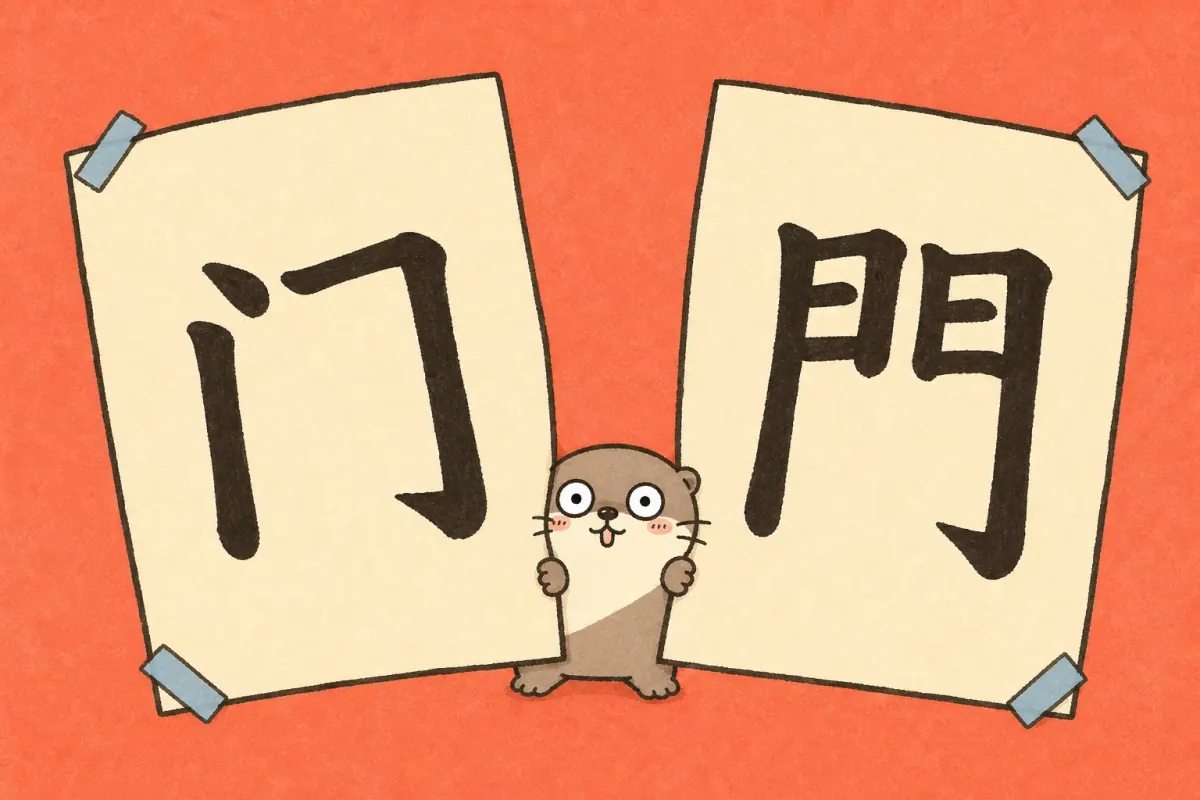
Taiwan and mainland China share Mandarin, but everyday objects do not always share the same name. A taxi is usually 計程車 (jìchéngchē) in Taiwan and 出租车 (chūzūchē) on the mainland. A text message is a 簡訊 (jiǎnxùn) in Taiwan and a 短信 (duǎnxìn) on the mainland.
These are regional vocabulary preferences, not two separate languages. Most differences are easy to understand from context, and speakers often recognize both forms. The useful goal is to actively use the word common in your main region and recognize the other one.
Twenty useful Taiwan and mainland word pairs
The table focuses on frequent, practical differences. Taiwan forms appear in traditional characters and mainland forms in simplified characters because that is how learners will usually meet them locally.
| Meaning | Taiwan Mandarin | Mainland Mandarin |
|---|---|---|
| taxi | 計程車 jìchéngchē | 出租车 chūzūchē |
| metro / subway | 捷運 jiéyùn | 地铁 dìtiě |
| bus | 公車 gōngchē | 公交车 gōngjiāochē |
| bicycle | 腳踏車 jiǎotàchē | 自行车 zìxíngchē |
| motorcycle | 機車 jīchē | 摩托车 mótuōchē |
| potato | 馬鈴薯 mǎlíngshǔ | 土豆 tǔdòu |
| tomato | 番茄 fānqié | 西红柿 xīhóngshì |
| kiwi fruit | 奇異果 qíyìguǒ | 猕猴桃 míhóutáo |
| broccoli | 青花菜 qīnghuācài | 西兰花 xīlánhuā |
| cheese | 起司 qǐsī | 奶酪 nǎilào |
| late-night snack | 宵夜 xiāoyè | 夜宵 yèxiāo |
| software | 軟體 ruǎntǐ | 软件 ruǎnjiàn |
| hard drive | 硬碟 yìngdié | 硬盘 yìngpán |
| printer | 印表機 yìnbiǎojī | 打印机 dǎyìnjī |
| video | 影片 yǐngpiàn | 视频 shìpín |
| text message | 簡訊 jiǎnxùn | 短信 duǎnxìn |
| information | 資訊 zīxùn | 信息 xìnxī |
| computer memory / RAM | 記憶體 jìyìtǐ | 内存 nèicún |
| power bank | 行動電源 xíngdòng diànyuán | 充电宝 chōngdiànbǎo |
| instant noodles | 泡麵 pàomiàn | 方便面 fāngbiànmiàn |
Taiwan’s Ministry of Education maintains a much larger cross-strait vocabulary comparison. Its entries often list several acceptable mainland forms, which is a useful reminder that neither region speaks with one perfectly uniform vocabulary.
Which transport words differ between Taiwan and mainland China?
Several differences appear as soon as you leave an airport or station. In Taipei you might ask:
捷運站在哪裡?
Jiéyùnzhàn zài nǎlǐ?
Where is the metro station?
In Shanghai, the natural local version is:
地铁站在哪里?
Dìtiězhàn zài nǎlǐ?
The grammar is identical. Only the regional noun changes. The same applies to 搭計程車 (dā jìchéngchē) in Taiwan and 打车 (dǎ chē) or 坐出租车 (zuò chūzūchē) on the mainland.
公車 and 公交车 need a little context. Mainland speakers also say 公共汽车 (gōnggòng qìchē), while 公交 (gōngjiāo) can refer more broadly to public bus transport. In Taiwan, 客運 (kèyùn) often appears for longer-distance or privately operated bus services.
Food words can cause real ordering surprises
The classic warning is 土豆. In most mainland Mandarin, it means potato. In Taiwan, 土豆 can refer to peanuts, influenced by Taiwanese Hokkien usage; the ordinary Mandarin word for potato is 馬鈴薯.
That makes this more than a spelling difference. If a Taiwanese menu says 土豆, do not automatically picture fries.
Other food pairs are less risky. 番茄 is understood on the mainland, and many mainland speakers also use it, even though 西红柿 is especially common in northern and standard everyday usage. Cheese has several names on both sides: 起司 is strongly associated with Taiwan, while 奶酪 and 芝士 both occur on the mainland.
Regional vocabulary is a matter of tendencies, not border control.
Technology produced a whole family of parallel words
Technology vocabulary is particularly systematic. Taiwan often uses 體, 碟, and 機 where mainland terminology uses 件, 盘, and verbal compounds:
- 軟體 / 软件
- 硬碟 / 硬盘
- 印表機 / 打印机
Once you notice the pattern, unfamiliar terms become easier to decode. 記憶體 literally suggests a “memory body,” while 内存 means internal storage or memory. In actual shopping, check the specification: everyday Chinese sometimes uses memory and storage terms loosely, just as English speakers do.
Do people understand the other region’s words?
Usually, yes. Shared media, travel, work, and the internet have made many prominent differences widely recognizable. A Taipei listener will probably understand 地铁; a Beijing listener can often infer 捷運. Understanding does not make every term sound local, though.
Some words have also crossed over or compete with several local options. Younger speakers may use a form they encountered online, and vocabulary varies within mainland China as well. 土豆, for example, does not have exactly the same food meaning in every Chinese-speaking region.
Our broader guide to Taiwanese Mandarin and mainland Mandarin explains how these vocabulary differences fit alongside pronunciation, script, and Zhuyin/pinyin.
How can you learn both varieties without mixing them up?
- Choose one active set. Use the words of the region where you live, travel, or consume the most media.
- Learn the other set for recognition. A two-column note is enough; you do not need two separate flashcard decks.
- Save whole phrases. Learn 搭捷運 and 坐地铁, not only the isolated nouns.
- Notice the source. Label a clip “Taiwan” or “mainland” before deciding that one teacher contradicted another.
- Match the person in front of you. Reusing someone’s own word is the fastest route to sounding natural in that conversation.
You do not have to erase one variety to understand the other. Keep one comfortable speaking base, then let repeated exposure turn the second set from “different vocabulary” into ordinary synonyms with a regional address.