
How to Learn Chinese with C-Dramas Without Constant Pausing
A practical C-drama study method that protects the story, uses Chinese captions well, and turns a few memorable lines into useful Chinese.
Read articleMoyu Chinese blog
Read clear guides to Chinese vocabulary, grammar, captions, and learning through videos.
Focused guides and practical examples for Video immersion.
A practical C-drama study method that protects the story, uses Chinese captions well, and turns a few memorable lines into useful Chinese.
Read article
Compare the best apps for learning Chinese with videos, including Moyu, FluentU, Language Reactor, Migaku, LingQ, and HelloChinese.
Read article
If written Chinese feels clear but natural speech disappears, the problem is usually sound recognition, word boundaries, or processing speed—not your memory.
Read article
Moyu and FluentU both teach Chinese through video, but one is built around effortless mobile discovery and the other around structured video lessons.
Read articleFocused guides and practical examples for Grammar and particles.

Learn how 吗, 呢, 吧, 啊, 了, 嘛, and 哦 shape questions, suggestions, reactions, and tone in natural spoken Chinese.
Read article
Learn how 了 marks a bounded event or a newly relevant situation—and why it does not simply mean that something happened in the past.
Read article
Learn how sentence-final 吧 makes suggestions, softens directives, marks guesses, and changes the feeling of common replies such as 好吧.
Read article
Use 了 for a bounded event and 过 for a past experience. Compare natural examples, negation, questions, and the cases where both can appear.
Read article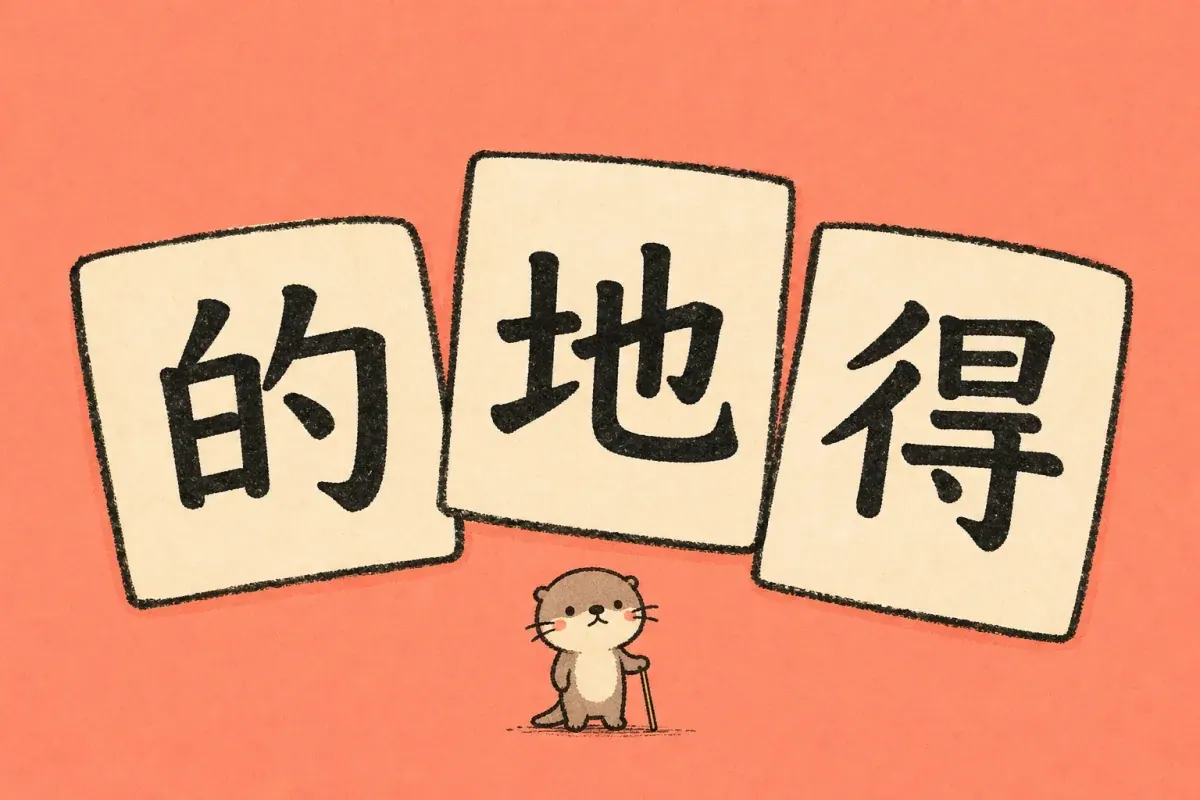
Learn when to use 的, 地, and 得 in Chinese with one quick test, natural examples, common omissions, and corrections for the mistakes learners make most.
Read articleFocused guides and practical examples for Pronunciation and listening.

Mandarin tones change shape in connected speech. Learn how context, tone sandhi, emphasis, speed, and neutral tone affect what you hear.
Read article
Learn when 不 changes from bù to bú, when it becomes neutral in A-not-A questions, and how to hear the rule in everyday Mandarin.
Read article
Learn when 一 is pronounced yī, yí, or yì, why the change happens, which cases keep first tone, and how to practise it naturally.
Read articleFocused guides and practical examples for Drama and modern culture.

Learn what Chinese microdramas are, how their rapid vertical episodes work, the vocabulary viewers use, and how learners can watch them actively.
Read article
Decode the Chinese plot labels behind microdramas, from 霸总 and 重生 to 穿越, 先婚后爱, 逆袭, and the twists that combine them.
Read article
Learn why 霸总 means a domineering CEO archetype, how the abbreviation is used online, and when the label sounds descriptive, teasing, or critical.
Read article
520 means “I love you” in Chinese internet slang. Learn why the number carries that meaning, how people use it, and what 5201314 means.
Read article
Qixi Festival falls on August 19 in 2026. Learn the story behind Chinese Valentine’s Day, its older 乞巧 traditions, and how it is celebrated now.
Read articleFocused guides and practical examples for Scripts and regional Chinese.

Compare Mandarin in Taiwan and mainland China: writing, vocabulary, pronunciation, Zhuyin, pinyin, and what the differences mean for learners.
Read article
Compare 20 common Taiwan and mainland Mandarin words for transport, food, technology, and daily life, with pinyin and practical usage notes.
Read article
Learn where simplified and traditional Chinese are used, how the scripts differ, and which one makes the most sense for your own Mandarin goals.
Read article
Compare pinyin and Zhuyin for learning Mandarin pronunciation, tones, dictionaries, and typing—and decide whether you need one system or both.
Read articleFocused guides and practical examples for HSK updates.

HSK 3.0 is official, but regular HSK 1–6 exams have not all switched. Here is what the July 2026 date means and which format to study.
Read article
Regular 2026 HSK 1–6 exams still use HSK 2.0. Learn when to follow that syllabus, when HSK 3.0 matters, and how to prepare without duplicating work.
Read article
HSK 3.0 is broader and usually harder at the same numbered level. Compare official vocabulary totals, skills, speaking, and the new nine-level ladder.
Read articleFocused guides and practical examples for Practical Chinese.

Learn natural ways to ask for the bill, pay at the counter, request separate checks or a receipt, and handle common restaurant payment questions.
Read article
Order at a Chinese restaurant with natural phrases for getting a menu, choosing dishes, stating dietary needs, requesting rice, and paying the bill.
Read article
Decode Chinese menus by spotting dish categories, ingredients, cooking methods, flavors, quantities, prices, and dietary warning words.
Read article
Navigate a Chinese train station with the words for entrances, security, ticket gates, platforms, carriages, delays, passports, and asking for help.
Read article
Understand Chinese words for crushes, flirting, situationships, dating, partners, making it official, long distance, breakups, exes, and getting back together.
Read article
Learn when to say 我爱你, when 我喜欢你 sounds more natural, and how to express affection to a partner, crush, friend, or family member.
Read articleFocused guides and practical examples for Chinese characters.
Chinese characters represent morphemes and syllables, not pictures or alphabetic letters. Learn how shape, meaning, sound, words, and script variants fit together.
Read article
Most learners need character recognition and typing more than calligraphy, but selective handwriting can improve form awareness, memory, and real-life confidence.
Read article
Add a Chinese pinyin keyboard, type syllables without tone marks, choose the right characters, and fix the candidate-selection mistakes beginners make.
Read articleFocused guides and practical examples for Chinese online.

A current beginner guide to Xiaohongshu (RedNote): download and sign up, enable translation, understand the feed, search effectively, and stay private.
Read article
Build useful Xiaohongshu searches in Chinese for travel, food, products, tutorials, honest reviews, and recent local recommendations.
Read article
Understand Xiaohongshu vocabulary such as 笔记, 种草, 拔草, 干货, 避雷, 翻车, 同款, and the phrases people use in comments.
Read article
Learn how 哈哈, hhh, 233, 笑死我了, 呵呵, 嘿嘿, and 嘻嘻 differ in Chinese messages, comments, and danmu—and which ones can sound awkward.
Read article
Learn what 520, 555, 666, 88, 886, 1314, and 233 mean in Chinese messages, where the codes come from, and which ones still sound natural.
Read article
Learn why 666 means “nice” or “skillful” in Chinese internet slang, where it came from, how to use it, and when it sounds sarcastic.
Read article
XSWL means “I’m dying laughing” in Chinese internet slang. Learn how the pinyin abbreviation works, how strong it sounds, and when to use it.
Read article
YYDS means “forever the god” in Chinese internet slang. Learn its esports origin, pronunciation, tone, examples, and when it sounds natural or ironic.
Read article
Learn what 扫码 means, the two ways QR-code payment works, and the Chinese phrases you need when scanning menus, payments, logins, and more.
Read article